Fire and Smoke Restoration Training for IICRC Continuing Education Credits
Fire damage restoration is one of the most demanding areas in the restoration industry. Unlike water damage alone, fire losses often involve structural damage, heavy smoke contamination, odor issues, and safety risks. That is why ongoing education is essential for technicians who want to stay skilled and confident in the field.
For certified professionals, completing IICRC continuing education credits is not just about maintaining certification. It is about staying current with modern restoration practices and improving real-world performance. Fire and smoke restoration training plays a critical role in that process.
Through structured online learning, technicians can now earn IICRC CEC credits online while strengthening their expertise in fire damage assessment, cleaning techniques, and deodorization procedures.
Why Fire and Smoke Restoration Requires Ongoing Training
Every fire loss is different. The type of materials burned, the intensity of heat, and the duration of exposure all affect how smoke residue behaves. Without proper training, cleaning methods can cause additional damage rather than restore the structure properly.
Smoke residue varies significantly depending on what was burned. Some residues smear easily, while others require dry cleaning methods before any moisture is introduced. Understanding these differences is critical for protecting surfaces and preventing permanent staining.
Technicians also face safety considerations during fire restoration. Air quality, residue exposure, and structural instability all require awareness and preparation. Continuing education ensures restoration professionals stay aligned with best practices.
This is why fire and smoke restoration training remains an essential part of professional development for restoration technicians.
What You Learn in Fire and Smoke Restoration Training
High-quality fire and smoke technician training focuses on practical knowledge that can be applied directly on job sites. The goal is not theory alone, but real-world execution.
- Fire Damage Assessment: Understanding how to inspect structures affected by fire and smoke.
- Types of Smoke Residue: Identifying wet smoke, dry smoke, protein residue, and fuel-related contamination.
- Cleaning Techniques: Applying appropriate dry and wet cleaning methods depending on residue type.
- Deodorization Principles: Learning how odor removal works and how to prevent recurring smoke smells.
- Safety Practices: Understanding protective measures when working in fire-damaged environments.
- Documentation & Workflow: Supporting consistent job-site communication and process control.
By completing structured coursework, technicians strengthen both technical knowledge and decision-making confidence.
How Online Fire and Smoke Training Works
Modern fire and smoke technician training is designed for working professionals. Instead of requiring travel or time away from job sites, online delivery allows technicians to complete lessons at their own pace.
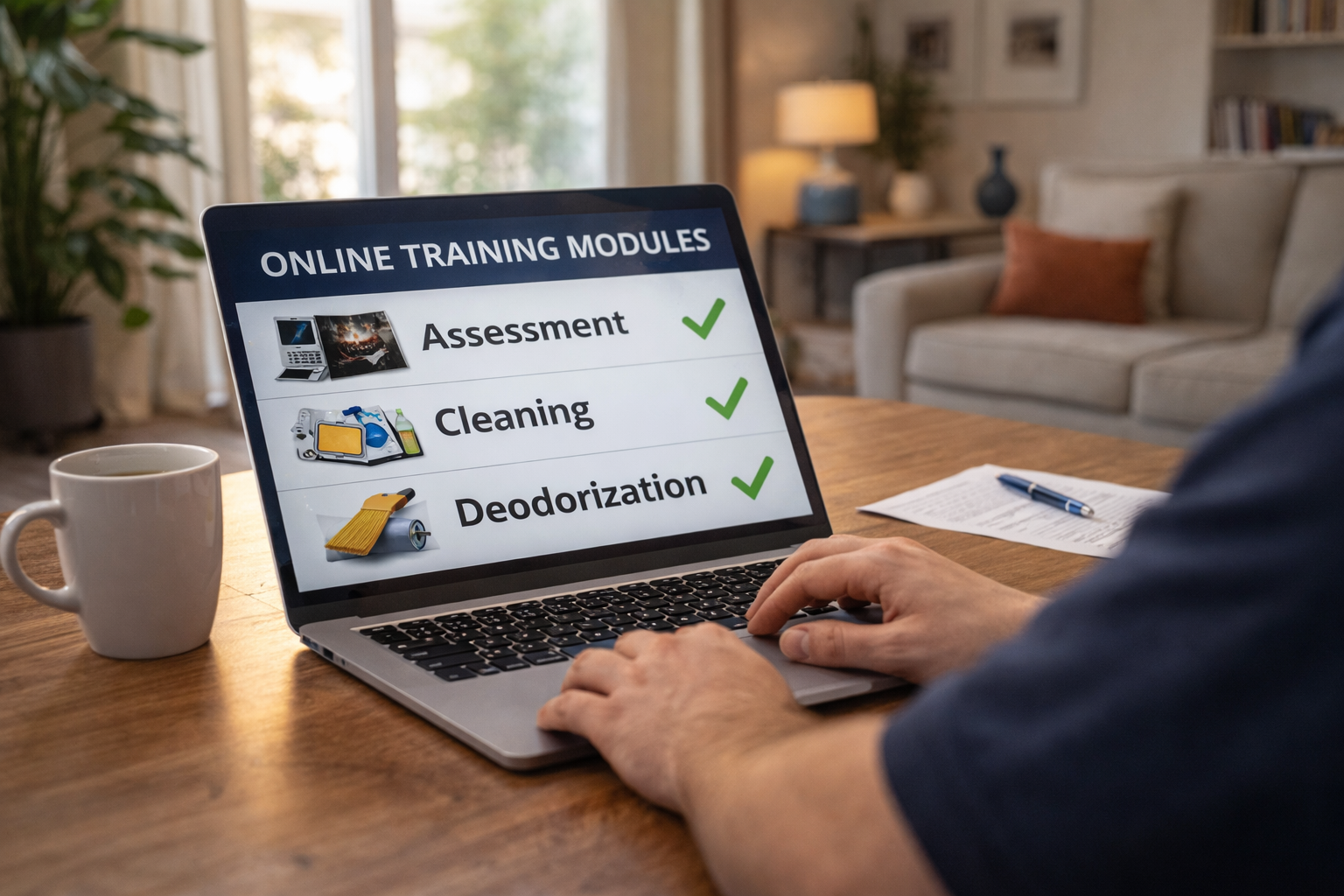
Training typically includes structured learning modules that guide participants through each topic step-by-step. Technicians log into the platform, review instructional materials, and progress through clearly organized sections.
Because the course is self-paced, professionals can complete training during slower work periods, evenings, or weekends. This flexibility makes it much easier to earn IICRC continuing education credits without disrupting daily responsibilities.
Upon completion, technicians receive confirmation of training, supporting their certification maintenance goals.
How This Course Helps You Earn IICRC Continuing Education Credits
Certified professionals must complete continuing education to maintain active credentials. Fire and smoke technician training contributes directly toward fulfilling those requirements.
By completing the course, restoration professionals can earn recognized IICRC continuing education credits that support certification renewal. This process allows technicians to maintain their credentials without retaking original certification exams.
Online access makes it easier to complete required hours efficiently. Instead of waiting for in-person classes, technicians can complete training on demand.
This approach simplifies certification maintenance while strengthening professional skill sets.
Who Should Take Fire and Smoke Restoration Training?
This course is ideal for:
- Fire restoration technicians
- Water damage professionals expanding into fire losses
- Cleaning and deodorization specialists
- Restoration company team members
- Certified professionals maintaining credentials
Even experienced technicians benefit from refresher education. Fire restoration methods continue evolving, and staying current protects both technicians and clients.
Benefits of Completing Fire and Smoke Training Online
- Flexible scheduling that fits around job-site demands
- No travel required
- Self-paced learning
- Immediate application of techniques in the field
- Supports certification maintenance
For busy restoration professionals, this flexibility makes continuing education far more manageable.
Earn Your IICRC Continuing Education Credits with RestoreTech360
RestoreTech360 offers structured Fire and Smoke Technician Training designed specifically for restoration professionals. The online format makes it simple to complete modules, strengthen fire restoration knowledge, and earn required IICRC continuing education credits.
With flexible access and restoration-focused instruction, technicians can continue building expertise without stepping away from active projects.
If you are ready to improve your fire and smoke restoration skills while maintaining certification, this training provides a practical and efficient solution.
Final Thoughts
Fire damage restoration demands precision, knowledge, and careful execution. Ongoing training ensures technicians stay confident and capable in complex loss environments.
By completing structured fire and smoke technician education online, restoration professionals can maintain credentials, strengthen field performance, and continue delivering high-quality service.
Continuing education is not just a requirement. It is an investment in professional growth and long-term success in the restoration industry.