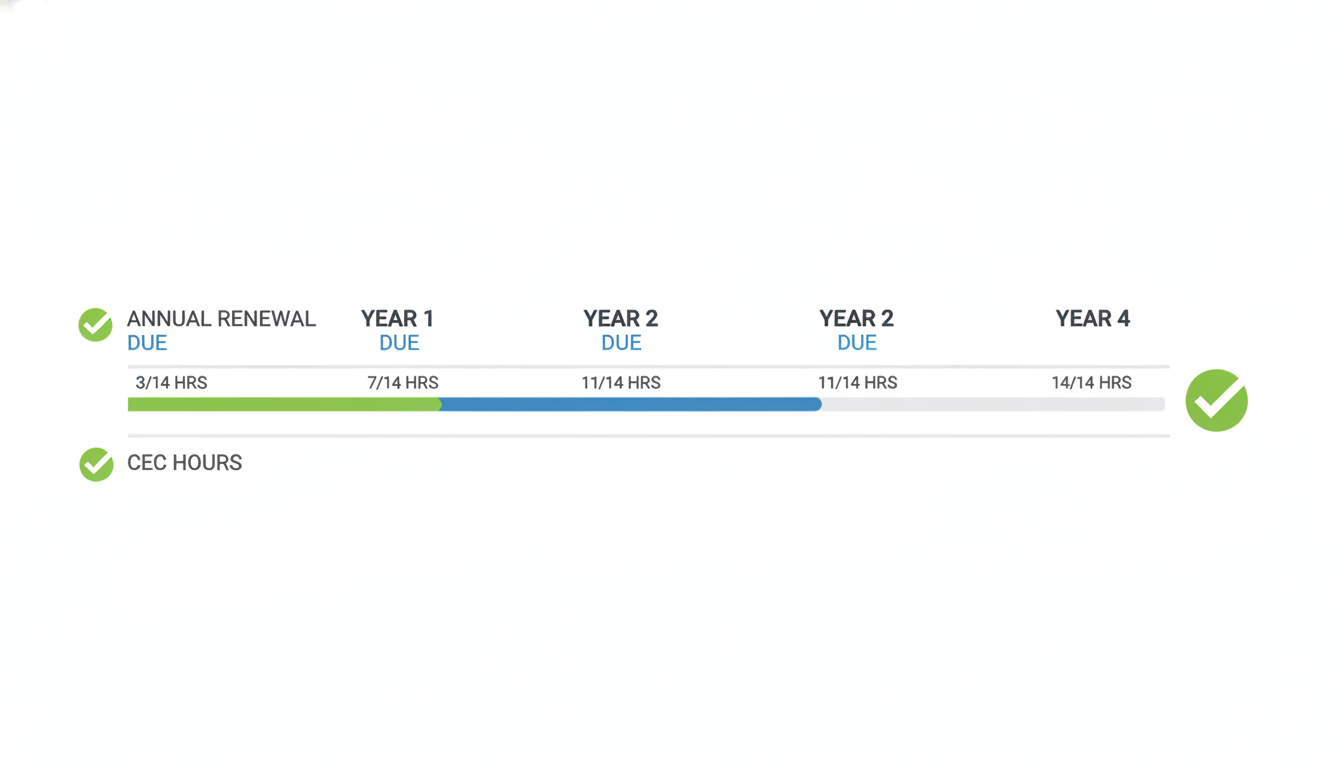
Next, if you hold a Master or Inspector credential, your continuing-education clock often runs on a separate 2-year cadence. That 2-year requirement does not replace your annual renewal, it sits beside it, meaning you can be fully renewed for the year and still be approaching a 2-year education checkpoint.
Here’s why this trips people up: annual renewal is typically tied to keeping your status active each year, while the 2-year cadence is about keeping the Master or Inspector credential current on its own schedule. Works best when you track these as two separate reminders; fails when you assume paying or renewing annually automatically resets the 2-year education timeline.
So, before you book your next class or log hours, verify three things now so you do not mix 2-year and 4-year rules:
Which credential the 2-year rule applies to in your profile (Master, Inspector, or both)
The start and end dates of your current 2-year window (use the dates shown in your account, not the date you last took a class)
Whether the course hours you plan to take count toward that credential type
If you do one thing, put one calendar hold on the earlier date, not the later one. For example, if your annual renewal is in 3 months but your 2-year checkpoint is in 6 weeks, the 6-week date is the one that can create an urgent scramble.
That said, use a two-reminder approach to stay out of trouble:
Common mistake: writing down your 4-year cycle end date and assuming it covers everything. Fix: keep separate labels in your calendar, such as “Annual renewal” and “Master or Inspector 2-year CE,” so you do not accidentally plan a 12-month schedule around a 24-month rule.