Also, imagine you are two weeks from your renewal deadline and you enroll in a class that says “IICRC” in the title, only to learn afterward it does not provide the continuing education credits (CECs) you need. Renewal students often must hit a specific number of CEC hours, and the wrong enrollment can push your timeline back by 30 days or more once you factor in course completion, credit posting, and paperwork back-and-forth.
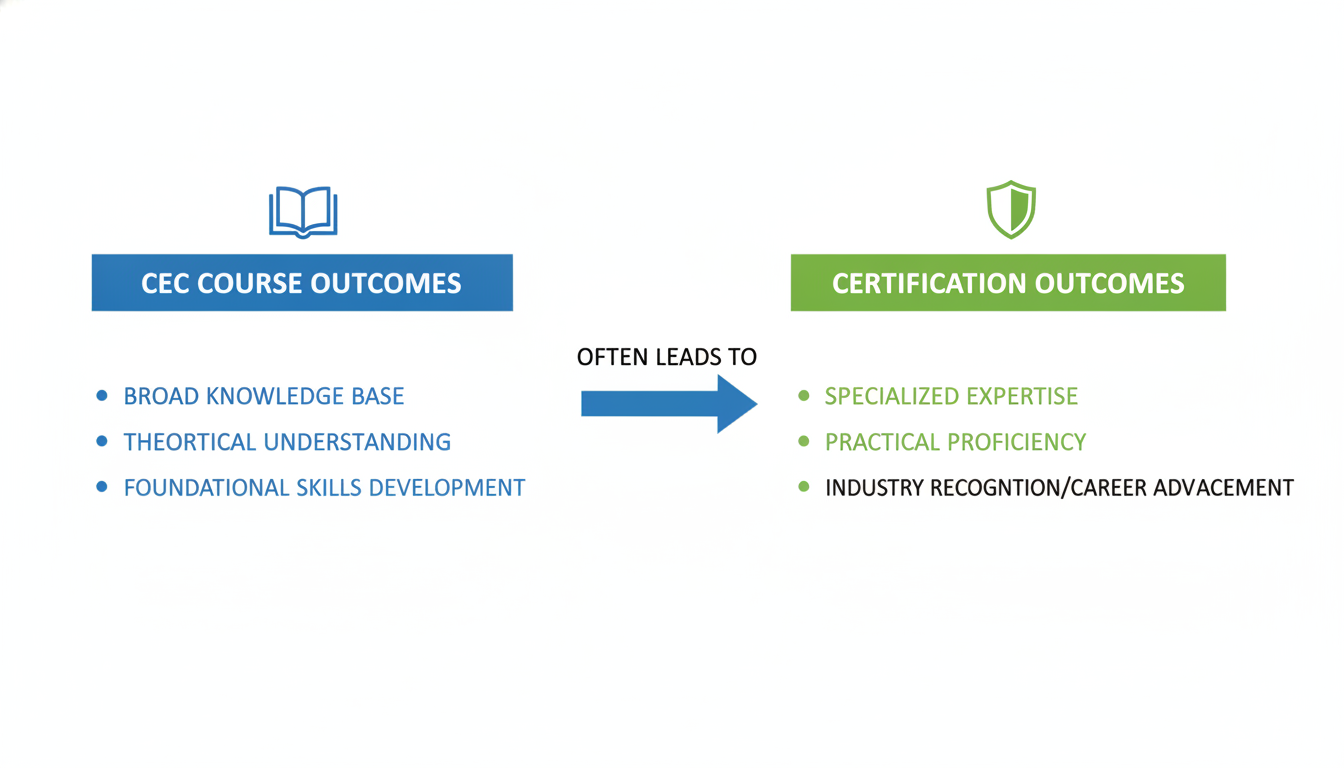
Here’s why this mix-up happens: “continuing education” and “certification” sound similar, but they serve different purposes. A CEC course is meant to log renewal credit hours, while a certification course is meant to train and test you toward a credential and may not count the way a renewal requirement does.
If you do one thing before you pay, verify these details in writing:
The course is explicitly labeled as a continuing education credit (CEC) option for renewal
The number of CEC hours you will receive and whether partial credit is possible if you are short on time
How credits are reported and the typical time it takes after completion for the credit to show as received
What you get at the end (certificate of completion, exam results, or both) and what your renewal portal actually accepts
Here’s the catch: a common mistake is buying based on a course name or a badge on the checkout page, then discovering the fine print after. The fix is simple: treat “CEC hours,” “certificate of completion,” and “certification” as three separate checks, and confirm which one you need for renewal before you enroll.
By the end of this post, you will know exactly how CEC courses differ from certification, and you will have a short verification checklist you can use to confirm you are paying for the right outcome.