IICRC CEC Credits for Technicians With Expired Certification Under 24 Months

Jul 23 / RestoreTech 360 Team

Key Takeaways

  • If your IICRC certification expired less than 24 months ago, you can often restart by emailing renewals to request an invoice

  • How long you have been expired decides whether CEC credits can support renewal or whether you may need to retest

  • Gather your certification details and CEC documentation early to avoid delays, missed work, and last-minute back-and-forth

Your certification lapsed and a job is coming up, here is the fastest way to confirm your next step

You’re scheduled for a water loss job tomorrow, you open the IICRC system, and your status shows expired. In that moment, the goal is not to guess which class to take, it’s to confirm what the IICRC needs from you so you do not waste time or money.

Most renewals stall for the same reasons: missing dates, missing course records, or unclear next steps. If you can close those gaps in 20 to 30 minutes today, you can usually get a clear answer on what to do next before you start paying for classes.

Next, do this in order so you can get a yes or no quickly:

  • Check the expiration date shown in your IICRC record and write it down

  • List the certifications that are expired (for example, WRT, ASD, AMRT)

  • Pull any proof you already have: course completion certificates, transcripts, or receipts (PDFs are easiest)

  • Make a simple timeline: when you last renewed, when you stopped paying fees, and any classes taken since

  • Confirm whether you have any CECs (continuing education credits) recorded and whether they are tied to the right certification

If you do one thing, collect your course records first. A common mistake is buying a CEC class before you confirm what is already on file, then finding out you duplicated credits or the class does not apply to that certification.

So you can confirm your next step fast, send one short email (or support message) with only what they need:

  • Your full name and IICRC number

  • The certification(s) that show expired

  • The expiration date displayed in the system

  • A single sentence on what you need: “I have a job scheduled tomorrow and need to confirm the fastest path to return to active status”

  • Attach your course records (or say when you can send them)

CECs matter here because they can count toward renewal, but only when they match the right certification and time window. If you’re short on time, skip researching class catalogs today and focus on getting your record details and documents sent, because that is what determines whether CECs help you right now.

Confirm you are in the under 24 months window before you spend money on classes

Next, confirm your timing before you register for anything. A common mistake is paying for the wrong class because you assumed your cert is “about a year expired” when it is actually closer to two years, which can change what you’re allowed to do.

If you do one thing first, do this: verify the exact expiration date for each certification that lapsed. Check which specific certification(s) are expired (for example, WRT vs ASD), and write each expiration date down in one place so you are not guessing on a call or email.

Also, confirm whether all your certs expired or only one. It is possible to have one credential lapse while others are still active, and mixing those up can lead to buying CECs that do not apply to what you actually need.

Use this quick checklist before you spend money:

  • List every certification you hold and mark each one as active or expired

  • Record the exact expiration date for each expired certification

  • Note whether the oldest expiration date is under 24 months ago

  • Write down your IICRC ID

  • Save the contact details you will use (name, phone, email) so your record can be found quickly

If you’re short on time, focus on the oldest expiration date and the one certification you need for the upcoming job. You can confirm the rest later, but you should not register for classes until you know whether you are inside or outside that 24-month window.

Why the length of expiration changes everything and what IICRC expects next

Next, treat the expiration length like a switch that changes what you have to do to get active again. In practical terms, being under 24 months expired can mean a simpler path, while being over 24 months can trigger different reinstatement requirements, including extra steps you did not plan or budget for.

A common mistake is signing up for classes before confirming where you fall, then finding out the reinstatement rules you assumed do not apply to your case. The fix is simple: confirm the expiration window first, then choose training only after you know what IICRC will accept for reinstatement.

If you do one thing, do this: if your certification has been expired for less than 24 months, email renewals to request an invoice. Keep the message short and specific so it is easy to process.

Use this quick checklist before you hit send:

  • Include your full name and IICRC number if you have it

  • State the certification(s) that are expired and that the expiration is under 24 months

  • Ask for the renewal invoice and confirm the email address to receive it

  • Save the reply and invoice for your job file in case a manager asks for proof

Use IICRC CEC credits the right way to get active again without rework

Also, it helps to separate what CECs do from what they do not do. CECs are proof of continuing education that can help you meet renewal requirements, but they do not automatically flip an expired status back to active. Treat them as documentation you may need to submit during the renewal or reinstatement step, not a shortcut that happens on its own.

A common mistake is taking a class first, then realizing the provider, dates, or credit amount does not match what you need, which can mean extra emails and delays. If you do one thing, confirm how your CECs will be applied to your specific certification status before you book another course.

What to gather before you start the renewal email thread

Next, get your paperwork together so you only have to submit once. Set aside 15 minutes and put everything into one folder (PDFs or clear photos) so you can answer questions fast if your job start date is close.

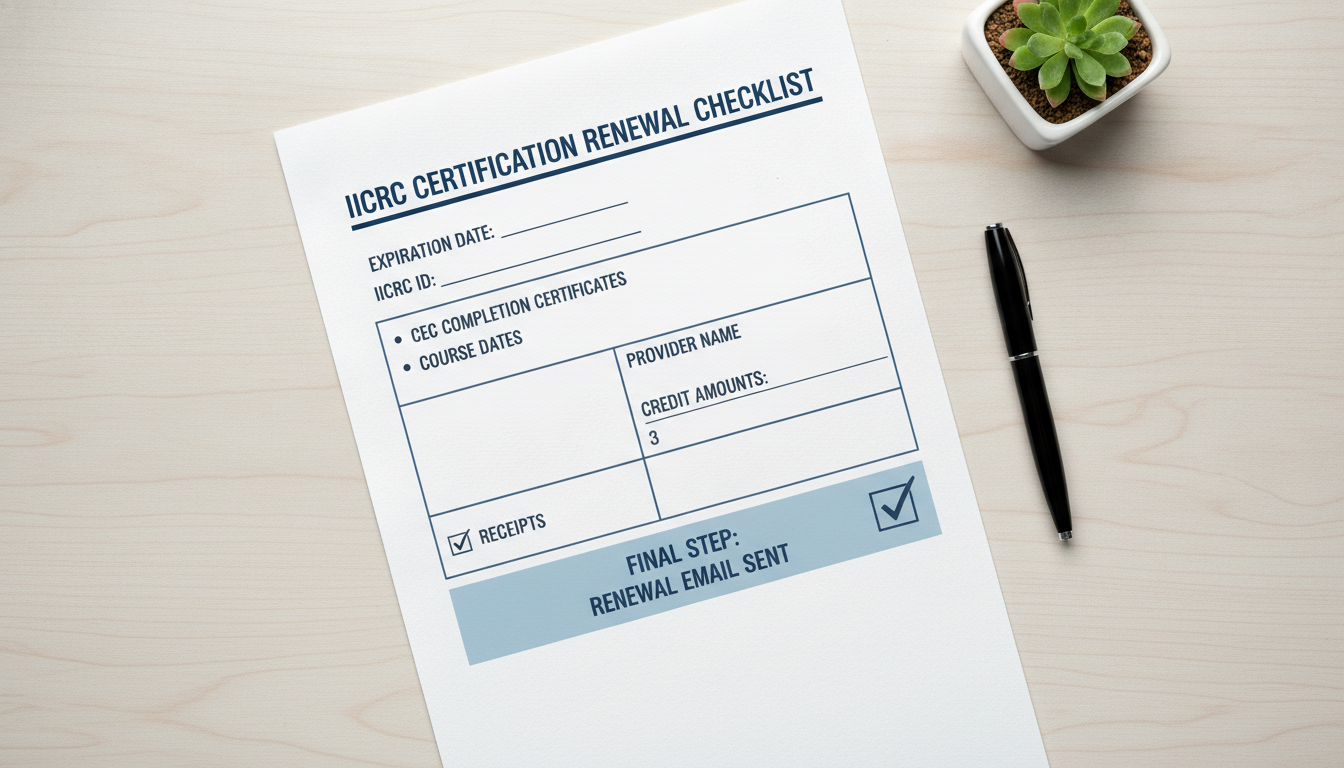
Use this checklist:

  • Your IICRC ID and the certification name(s) you want active again

  • Your expiration date (or a screenshot of the status page if you have it)

  • Each CEC completion certificate (one file per course if possible)

  • Course completion date(s) and the course provider name

  • Credit amounts earned per course (and the total you expect to count)

  • Receipts or proof of payment if you have them

  • A short note that matches the documents, for example: “I completed 6 CECs between March and May and want to confirm the correct renewal step”

If you’re short on time, skip formatting and focus on accuracy: readable certificates, clear dates, and the exact credit amounts. That is usually what prevents back-and-forth and helps you get active again without rework.

Closing remarks

So, before you spend time or money, anchor on one simple idea: “The easiest renewal is the one you start before you need it.” A small action this week can save you from scrambling when a job shows up and you need your status to be active.

Next, pick one thing to do today and do it in 10 minutes:

  • Confirm your expiration date and how long you have been lapsed

  • Assemble your documents in one folder (digital or paper) so you are not searching later

  • Email renewals to ask for the invoice and confirm what you need to submit