Next, it helps to see contents as the part of the job that creates proof, not just a pile of boxes. On many water, fire, and mold losses, the claim outcome often turns on what you touched, where it went, what condition it was in, and how you proved it at each step.
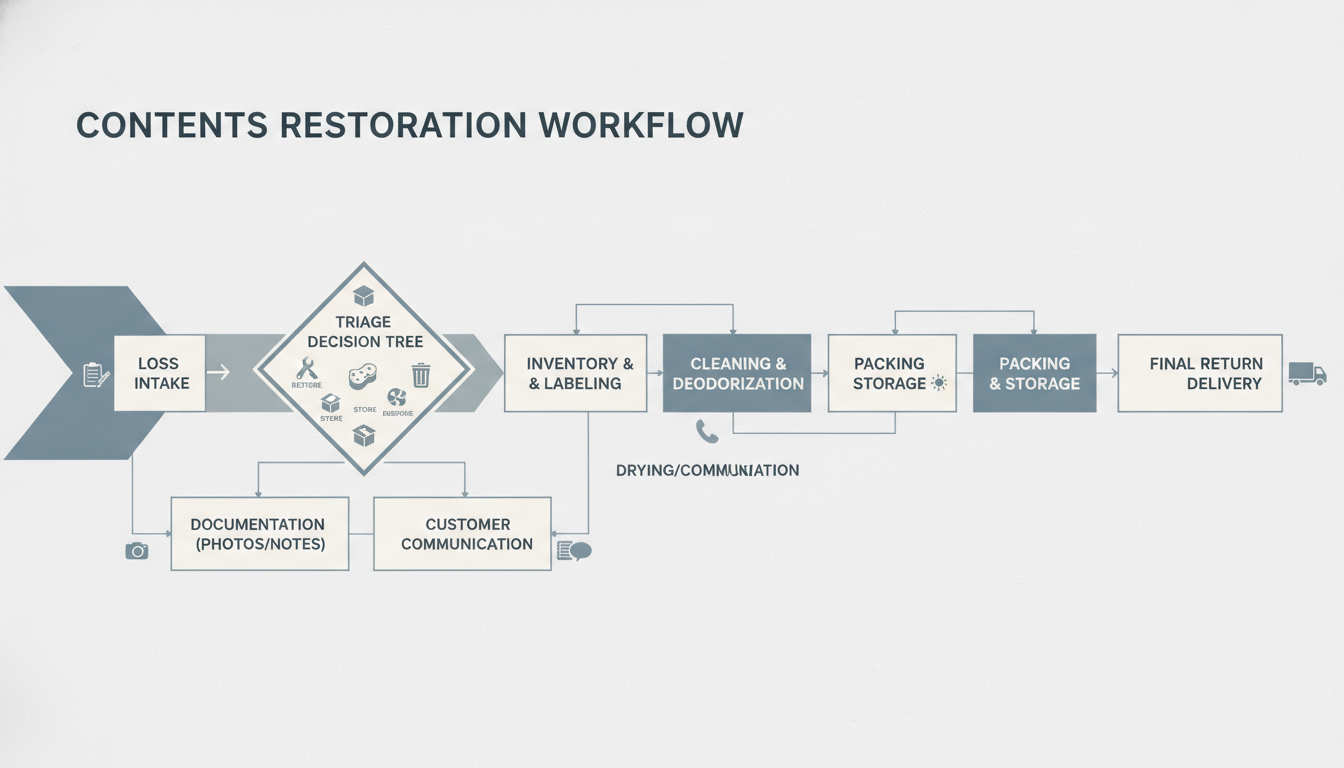
When the contents scope is clear, the rest of the job runs cleaner: item manipulation (moving and handling), pack-outs, cleaning, deodorization, and return logistics all line up with the adjuster’s questions. When the contents scope is vague, you lose time to re-work and phone calls, and the customer fills the gaps with assumptions.
Also, each contents task has a claim-facing purpose that needs to be written down and photographed. For example, a pack-out is not just “remove contents”, it is a chain of decisions about pre-existing condition, room of origin, labeling, and where items are stored for 7, 14, or 30 days.
If you do one thing, do this: tie every major step to a measurable record.
Item manipulation: photo before moving, note fragile or high-value items, record who handled it
Pack-out: inventory with room tags, box numbering, and a quick condition note for each item group
Cleaning: method used and what was and was not cleanable (for example: porous smoke-impacted items)
Deodorization: where odor was present, what was treated, and what limitations were explained
Return logistics: return date targets, what is held back, and signed receipt at delivery
But the common failures are usually basic, and they show up when the job gets busy. A PM might be juggling three water losses, a fire board-up, and a mold containment, and the contents part gets treated like “helpers can handle it.” That is when costs rise and trust drops.
Here’s the catch: small documentation gaps become big arguments later, especially after items are cleaned, disposed, or returned.
Common failure points to watch for
Damaged items: boxes overloaded, no notes on pre-existing damage, fragile items not separated
Missed documentation: no room-of-origin, blurry photos, no timestamps, no photo of the label on the box
Chain-of-custody gaps: unclear handoff between technician and warehouse, missing storage location, no signature at pickup or return
Unrealistic expectations: customer thinks every item will look “like new” after soot or Category 3 water exposure
A practical fix is to set three checkpoints on every job: at pack-out, at warehouse intake, and at return. Even if each checkpoint takes 15 minutes, it can prevent hours of re-work and reduce disputes about what happened to a specific item.