TCST IICRC CEC: Trauma and Crime Scene Cleanup Training

Learn what TCST trauma cleanup training covers, who needs it, and why it improves safety, documentation, and professionalism. Earn 4 IICRC CEC hrs.
Jul 2 / RestoreTech 360

Key Takeaways

  • Trauma cleanup training helps restoration technicians work safely, respectfully, and within jobsite rules when bloodborne pathogens, sharps, and strong emotional stress are present

  • The TCST IICRC CEC path gives qualified pros 4 continuing education credit hours while improving documentation habits and on-the-spot job decisions (for example, when to stop and escalate the scope)

  • The right training lowers risk, builds customer trust, and makes outcomes more consistent across crews when the stakes are high

When a normal restoration playbook is not enough

Picture showing up for what sounds like a normal loss, then realizing the scene includes potential biohazards, a distressed family member still on site, and restricted access because law enforcement is involved. Your usual drying, demo, and pack-out flow can fall apart fast when you have to pause for permissions, preserve areas, and control who enters and exits.

But the bigger shift is risk: when blood or other potentially infectious material is present, one missed control can create an exposure problem in minutes. For example, pulling baseboards without proper PPE (personal protective equipment) or bagging debris in the wrong container can contaminate a hallway, your tools, and the truck before you notice.

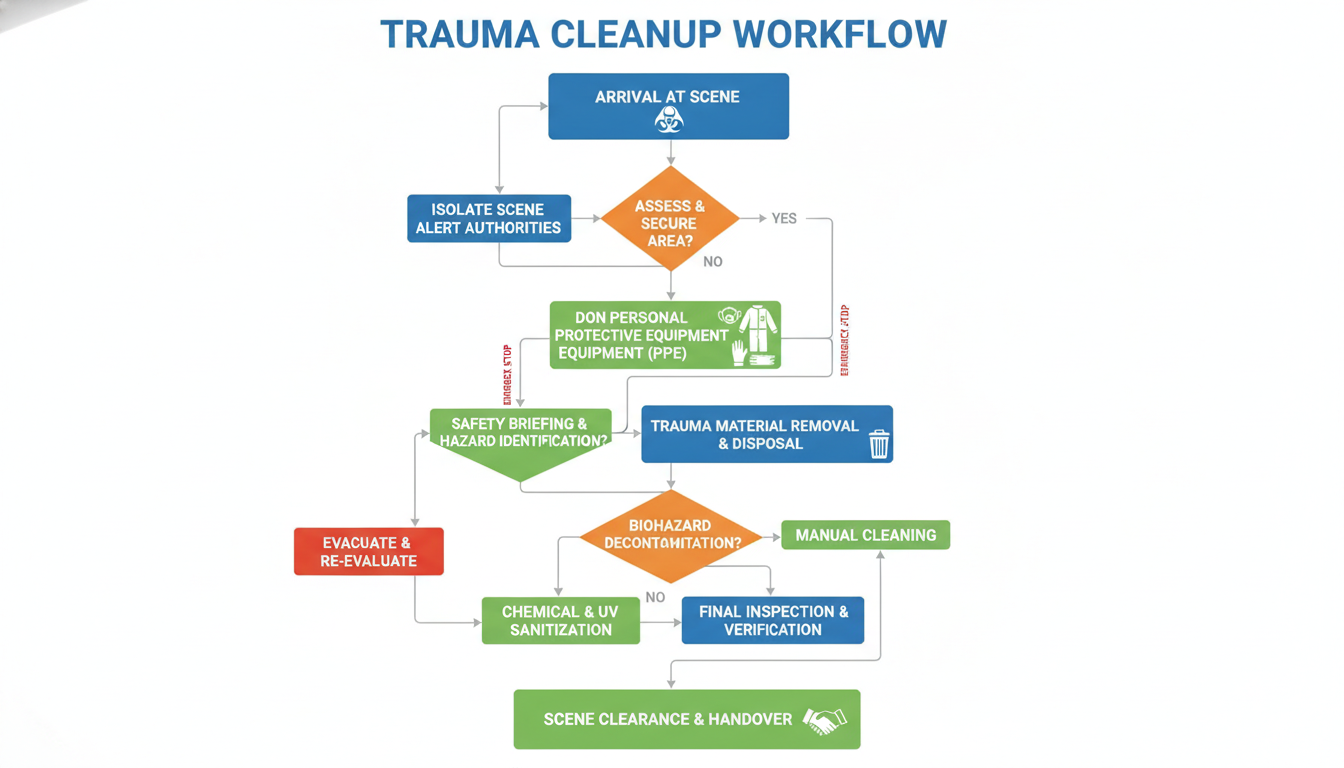
So if you do one thing differently on these calls, make it this: stop and switch to a repeatable safety-first process before you touch anything. That process starts with a quick scene assessment and clear zoning (clean zone vs work zone), then choosing the right PPE, containment, and waste handling for the conditions.

Here's the catch: trying to improvise because you are short on time usually backfires. If you are under pressure, skip nonessential tasks like “just grabbing a few items” and focus on access control, PPE, and preventing cross-contamination first.

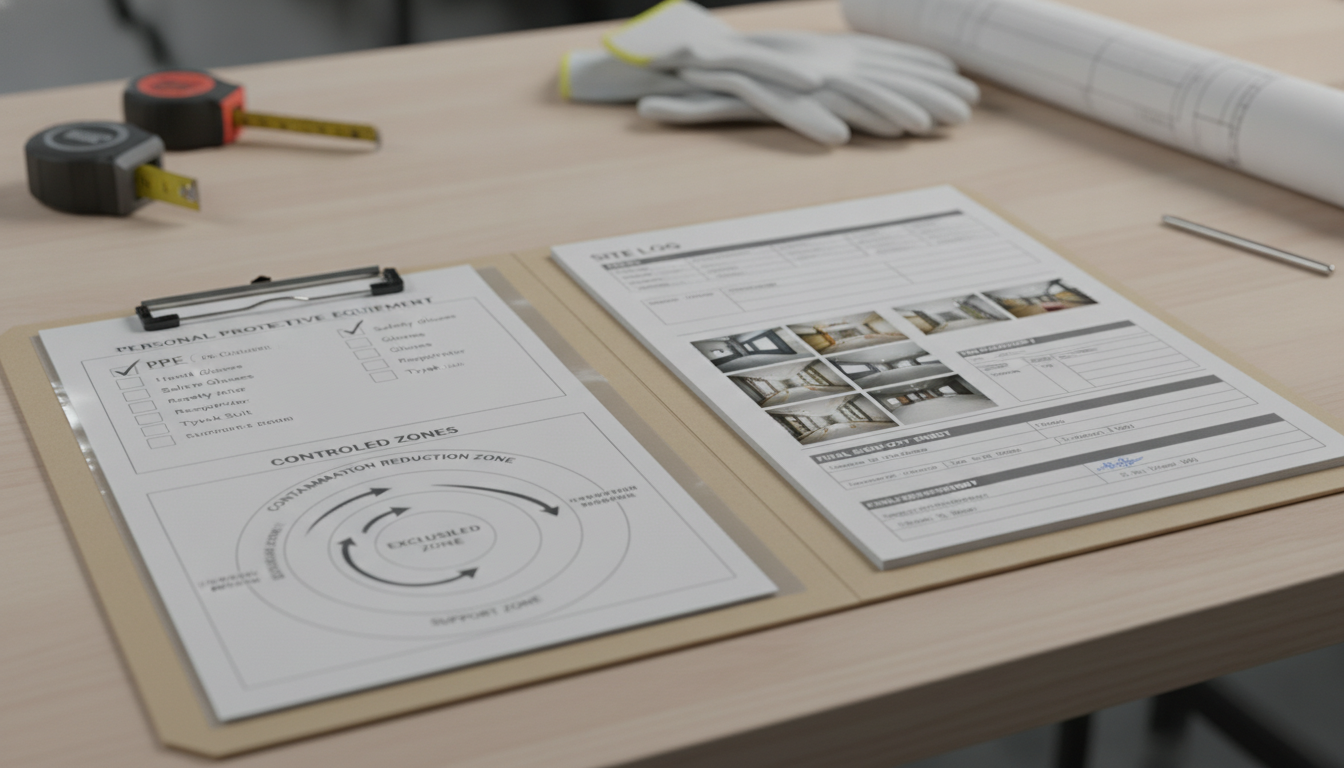
Common mistake to avoid: treating the job like a standard category loss and only thinking about hazards after demo begins. Fix it by using a short pre-work checklist you can run in 2 to 3 minutes:

  • Confirm who has authority on site and what areas are off-limits

  • Set boundaries and a path in and out before moving equipment

  • Put on the correct PPE before crossing into the work area

  • Stage clean tools and bags outside the work zone

  • Plan where contaminated waste will go before you start

What trauma and crime scene cleanup training actually covers

Trauma and crime scene cleanup is not “a tougher version of regular cleaning.” It is controlled work around potentially infectious material, sharp hazards, and high-stress scenes, where the goal is safety and verified decontamination, not just making the space look normal again.

Typical calls include unattended deaths, suicides, homicides, major injuries with blood loss, and accidents in homes, vehicles, or commercial spaces. A standard restoration playbook often assumes the site is stable and the material risks are already known, but trauma scenes can change fast once you start moving contents or opening cavities.

Next, training focuses on core competencies you can apply on day one, especially when you are the first tech on site and you have to make good calls in the first 10 minutes:

  • Hazard awareness: spotting blood and body fluid pathways, sharps, drug paraphernalia, pests, and structural risks before you touch anything

  • Containment mindset (thinking in zones): setting a clean zone, warm zone, and hot zone so contamination does not spread into hallways, HVAC returns, or your truck

  • PPE selection and limits: choosing gloves, eye and face protection, respiratory protection, and protective clothing based on exposure risk, not comfort or habit

  • Decon basics: cleaning versus disinfecting versus disposing, dwell times, and how to avoid cross-contamination during tool and equipment wipe-downs

  • When to escalate or refer: pausing work if you find unknown chemicals, large-scale structural involvement, heavy odor migration into HVAC, or anything outside your scope or local requirements

But the training also makes the tradeoffs clear. This approach works best when you slow down and build control first, and it fails when you rush to “start tearing out” without a plan.

A common mistake is under-scoping because the visible area looks small. The fix is to assume hidden migration until you confirm otherwise, then document your decision points as you go, for example what you saw on arrival, what you contained, what you removed, and what you cleared before you pack up.

Who should take TCST training and when it becomes a must-have

Next, it helps to be clear about who TCST training is for, because the work rarely stays inside one job title. When a call comes in at 2 a.m., the person who answers, the person who writes the scope, and the person on site all need the same safety and documentation baseline to avoid gaps.

TCST training tends to pay off fastest for roles that touch the job from first contact through closeout:

  • Restoration technicians who perform the cleanup and waste handling

  • Crew leads who set containment, direct PPE use, and keep the site controlled

  • Estimators who write a clear scope, support line items, and collect the right photos

  • Owners and managers who set company standards and reduce rework and liability

  • On-call teams rotating nights and weekends who need consistent steps under pressure

So when does it move from “nice to have” to “you probably need this now”? Look for triggers that signal your current playbook is being stretched, or that consistency is slipping across technicians.

Common triggers include:

  • You are getting recurring biohazard calls (for example, weekly hoarding with bodily fluids, repeated unattended death referrals, or frequent vehicle bio cleanups)

  • You are expanding service lines from water and fire into biohazard or trauma-related work

  • You are seeing insurer or adjuster expectations rise around documentation, job notes, and defensible invoicing

  • You have new technicians ramping up and you need one standard set of steps for PPE, containment, and disposal

If you do one thing, make it this: train the people who write the scope and the people who execute it at the same time. It works best when the whole team follows one set of steps; it fails when only one person is trained and everyone else improvises.

Why TCST matters for safety, professionalism, documentation, and sensitive situations

Next, the value of TCST shows up when the job is still changing, the scene is emotionally charged, and the risks are not obvious at first glance. A technician can be exposed in minutes if they skip basic controls, and small missteps often snowball into cross-contamination, client complaints, or billing disputes.

By the end of this section, you will be able to connect TCST habits to four outcomes you can measure on real jobs: fewer exposures, clearer client communication, cleaner job files, and steadier work in sensitive settings.

Also, TCST matters because it forces repeatable behaviors under stress, not just knowledge.

  • Safety: reduce exposure pathways and cross-contamination by building habits around controlled zones, PPE, and step-by-step execution

  • Professionalism: set expectations with clients and stakeholders, communicate boundaries, and keep composure in high-emotion environments

  • Documentation: create defensible notes, photos, chain-of-custody awareness, and job records that support billing and reduce disputes

  • Sensitivity: practical guidance for working around families, property contents, and law enforcement or medical examiner constraints

That said, these benefits come with a tradeoff: strict zoning and PPE controls work best when you control traffic and entry points, and they can fail when other trades, building staff, or curious occupants keep crossing boundaries. If you do one thing, do this first: establish a clear hot, warm, and clean zone with one entry point, then brief everyone on what must not cross back into clean areas.

A common mistake is treating documentation as an afterthought, taking a few photos at the end, and writing notes from memory. Fix it by logging decisions as you go, capturing before, during, and after photos in a consistent order, and noting who had access to the space, especially when law enforcement, a medical examiner, or property representatives are involved.
What to expect from RestoreTech 360 TCST IICRC CEC course

Next, if you are trying to get qualified continuing education hours without pulling yourself off jobs for a full day, the course format matters as much as the topic.

This course is a short, focused online option: 4 CEC hours, flexible, self-paced, and IICRC approved for qualified continuing education hours. It works best when you want a consistent baseline for trauma and crime scene cleanup across your team, and it can fall short if you expect hands-on practice without pairing it with field coaching.

So the real win is how easily you can fit it into a working week without creating scheduling chaos. A practical way to plan completion for busy techs is to break it into small blocks and set a simple finish line that is visible to the whole crew.

  • If you are short on time: plan 2 sessions of about 2 hours across two shifts

  • For lead techs: finish first, then run a 15-minute tailgate review to align PPE, containment, and documentation habits

  • For team-wide consistency: assign the same completion week and use the training to standardize SOPs for items like entry control, waste handling, photo logs, and customer-facing communication

  • Common mistake: letting everyone “get to it when they can,” which creates uneven practices site to site

  • Fix: set a due date, name an SOP owner, and update one checklist the week the training is completed

Closing remarks

Train for the call you hope you never get. When the work is high-stakes and time-sensitive, training is not just about techniques, it is about walking in with a plan when everything feels chaotic.

Next time you step into a trauma or crime scene job, ask what would change if your team already shared a safety and documentation playbook before you arrived. If you do one thing, make sure everyone knows the basics of hazard controls, clear notes, and consistent photo documentation so you can focus on doing the work correctly under pressure.

Enroll when you are ready, train on your schedule